
Emergency Air Duct Cleaning Near Me: What Dayton Homeowners Should Do First
If you’re searching “emergency air duct cleaning near me” in Dayton, shut off your HVAC system immediately and don’t run it again until a technician assesses the situation. Most duct emergencies—fire smoke, sewage backup, confirmed rodents, or post-flood contamination—get worse when air keeps moving through the system. For same-day assessment in Dayton, call Titan Air Duct Cleaning Greater Dayton at (866) 834-6947; estimates are free and we’ll walk you through what to do while you’re waiting.
Here’s the mistake we see constantly: a homeowner smells something wrong, sees debris blowing from a vent, or discovers water in the basement near ductwork, and their first instinct is to “air out the house” by cranking the HVAC. In two decades of cleaning air ducts across Dayton, we’ve seen that impulse turn a contained problem into a whole-house contamination. The air you move through dirty ducts doesn’t magically get clean—it deposits whatever’s in there into every room the system serves.
Why Running Your HVAC During a Duct Emergency Makes Things Worse
Your ductwork is a closed circulation loop. When the blower runs, it creates negative pressure at return vents and positive pressure at supply vents, moving air through every connected branch in the system. That design works beautifully for climate control. It works terribly for containing contamination.
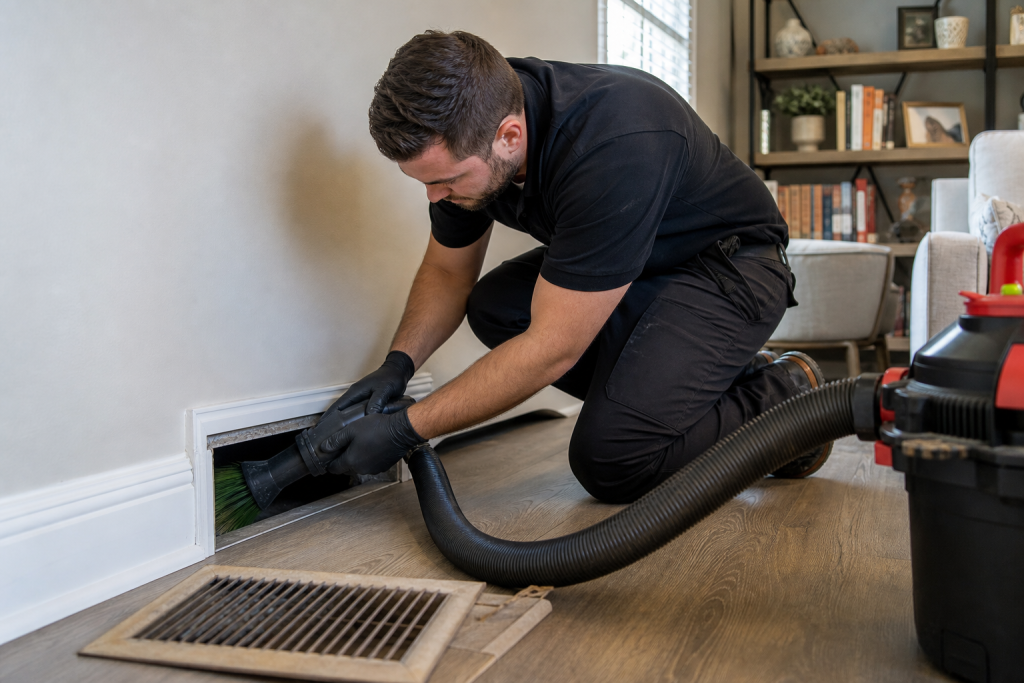
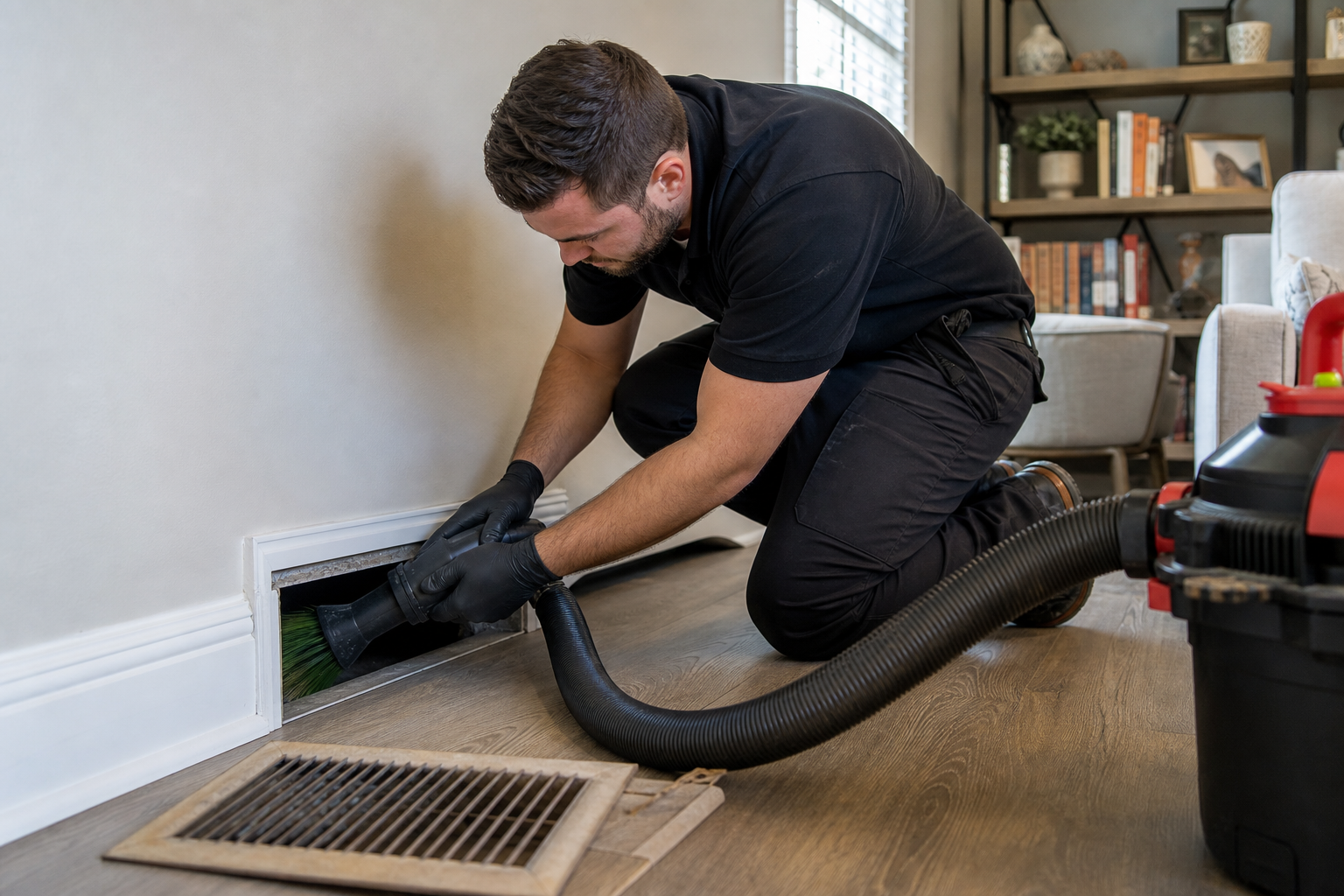
We were called to a home in Oakwood last year where a homeowner had noticed a sewage-like smell after a heavy spring rain. Instead of shutting off the system, they ran the fan continuously for two days trying to “clear the air.” By the time we arrived with our Rotobrush and Nikro equipment, the contamination that had started in one basement return line had been pushed through the entire trunk-and-branch system. What should have been a localized remediation became a whole-house cleaning with added sanitizing work. The homeowner’s instinct was completely understandable—and completely costly.
What to shut off, in this exact order:
- Thermostat to OFF: Stop the blower from circulating air immediately. Don’t just adjust the temperature—turn the system completely off.
- Electrical breaker for the HVAC unit: This prevents any automatic cycles or smart-home schedules from restarting the system.
- Close individual vent dampers if accessible: Only if you can reach them without entering unsafe areas. Don’t force stuck dampers.
Document what you shut off and when. Our team will verify this during our assessment, and it helps us understand how much circulation may have occurred before containment.
The Four True Duct Emergencies (And Why Everything Else Can Wait)
Not every dirty duct situation is an emergency. Dayton homeowners call us panicked about dust buildup, minor odors, or reduced airflow, and we always tell them the truth: these need attention, but they don’t need 2 AM service. Here are the four scenarios that genuinely warrant urgent response:
- Fire or smoke damage: Smoke residue contains acidic compounds that degrade duct liner and adhesives. The longer it sits, the more it chemically bonds to surfaces. Post-fire duct cleaning is fundamentally different from routine service—standard brushes can damage compromised liner, and standard vacuums won’t capture the ultrafine particulate that smoke leaves behind.
- Sewage backup or gray water intrusion: Any water containing biological material introduces bacteria and viruses into the system. The EPA considers this Category 3 contamination, and it requires specialized sanitizing protocols beyond standard cleaning.
- Confirmed rodent intrusion: We mean confirmed—droppings visible, nesting material found, or a pest professional has documented activity. Rodent waste can carry hantavirus and other pathogens that become airborne when disturbed. Standard duct cleaning without proper PPE and containment can aerosolize these hazards.
- Post-flooding with standing water near ductwork: Dayton’s location in the Great Miami River watershed means basement flooding isn’t rare, especially in older neighborhoods like Linden Heights or Five Oaks with aging storm infrastructure. Water plus organic material plus dark ductwork equals mold growth within 24–48 hours.
Everything else—dusty vents, musty smells without a water source, reduced airflow, allergy symptoms—benefits from prompt scheduling but doesn’t require emergency rates or after-hours dispatch.
Post-Flood Duct Situations: Why Cleaning Before Assessment Backfires
Dayton’s flood risk isn’t theoretical. We’ve responded to homes near the Stillwater River after overflow events, and we’ve seen the same pattern repeat: homeowners want ducts cleaned immediately after water recedes, before they’ve confirmed the system is actually dry inside.
Here’s why that sequence matters. Ductwork is metal or fiberglass board with internal insulation. Water wicks into that insulation through seams and joints you can’t see from the outside. Running cleaning equipment through damp ducts doesn’t solve the moisture problem—it can force water deeper into the system and spread mold spores that haven’t even started colonizing yet.
The correct sequence for post-flood duct concerns in Dayton:
- Water damage restoration professional confirms structural drying is complete
- HVAC technician inspects ductwork with borescope camera for internal moisture
- Lab or professional assessment for mold if water sat more than 48 hours
- Then—and only then—duct cleaning with appropriate sanitizing
We use moisture meters and borescope cameras as part of our assessment, and we’ll tell you honestly if your ducts need drying time before cleaning. Two decades in this trade has taught us that the fastest path to a resolved problem isn’t always the fastest service call.
What Fire and Smoke Damage Actually Does Inside Your Ducts
Kitchen fires, electrical fires, or neighbor smoke intrusion—Dayton’s older housing stock sees all of these. What most homeowners don’t realize is that smoke damage changes the physical properties of duct interior surfaces.
The heat from a fire, even a contained one, partially melts or embrittles the adhesive that bonds fiberglass duct liner to the metal shell. Smoke particulate, especially from synthetic materials common in modern furnishings, carries acidic compounds that continue reacting with surfaces for days after the visible smoke clears. Standard Rotobrush contact cleaning can tear compromised liner free, creating obstructions and exposing raw fiberglass that sheds particles into your air stream.
Post-fire duct work requires gentler agitation methods, HEPA-negative-air containment, and often duct sealing or liner replacement in affected sections. We’ve developed specific protocols for these situations over our 20 years, and we always inspect with a camera before touching anything with a brush. If your Dayton home has had any smoke event, even a “small” kitchen fire that seemed contained, your ducts need assessment before routine cleaning begins.
Reaching Your Technician After Hours: Owner-Operated vs. Call Center Dispatch
When you’re dealing with a genuine duct emergency at 9 PM on a Saturday, who answers your call matters enormously.
National franchise networks and large multi-city operations route after-hours calls to centralized dispatchers. These dispatchers follow scripts, access basic scheduling software, and send whichever subcontractor or employee is marked “available” in your zip code. You won’t speak to the person who will actually enter your home. You can’t ask technical questions about containment protocols or equipment. You’re in a queue, and the goal is booking, not troubleshooting.
At Titan Air Duct Cleaning Greater Dayton home, your owner is your technician. Thomas Hernandez answers emergency calls directly, and if he’s on another job, he returns calls personally within the hour. When we schedule an emergency visit, the person you spoke with is the person who shows up with the Rotobrush and Nikro equipment, who assesses your specific situation, and who makes the call about what can wait and what can’t.
This isn’t a luxury—it’s how you get accurate triage. A dispatcher reading from a flow chart might send a standard cleaning crew to a smoke-damaged system. An owner-technician with 20 years of hands-on experience recognizes the difference in the first five minutes of conversation and brings the right approach.
What to Document Before Your Technician Arrives
While you’re waiting for emergency service, documentation protects you and helps us work faster:
- Photos of visible debris or staining at vent openings—don’t reach into the duct
- Timeline of when you first noticed the problem and any changes since
- Which rooms are affected and whether symptoms (odors, visible material) have spread
- Recent home events: flooding, fire, pest control visits, renovation work, HVAC repairs
- Your HVAC system’s age and last filter change—surprisingly relevant for context
If you’re in Dayton and dealing with any of the four true emergencies we outlined, Air Duct Cleaning in Dayton from our team includes this assessment as part of your free estimate. We’ll verify what you’ve shut off, inspect with cameras before any agitation, and tell you exactly what your system needs—not what our schedule wants to sell.
Related Services When Ducts Aren’t the Only Problem
Emergency situations rarely affect only ductwork. If you’re dealing with post-fire or post-flood concerns, your HVAC Cleaning in Dayton may need to include the coil and blower assembly, not just ducts. And if a dryer vent shares chase space with damaged ductwork, our Dryer Vent Cleaning in Dayton can assess whether lint and moisture have created secondary hazards. We handle the complete air pathway, which means you don’t need multiple vendors pointing fingers while your home stays unlivable.
What happens when you call
- 1
A real person answersNo phone trees — you reach a local pro.
- 2
You get an upfront price rangeHonest numbers before anyone is dispatched.
- 3
A background-checked tech heads outLicensed & insured, dispatched right away.
- 4
You approve before work beginsNothing starts until you say go.
Key Takeaways
- Shut off your HVAC completely at the first sign of contamination—running it spreads the problem
- Only four scenarios need true emergency response: fire/smoke, sewage, confirmed rodents, post-flood
- Post-flood ducts need moisture verification before cleaning; wet ducts plus brushes equal mold distribution
- Fire smoke chemically alters duct surfaces; standard cleaning methods can damage compromised liner
- Owner-operated service means technical assessment from the person who will do the work, not a dispatcher
The Bottom Line
Dayton homeowners searching “emergency air duct cleaning near me” at 2 AM are already stressed. The information above is designed to keep you from making the problem worse while you find help. Shut off the system, contain what you can, document what you see, and call someone who can actually answer technical questions about your specific situation.
If you’re in Dayton and need help tonight or this week, Titan Air Duct Cleaning Greater Dayton offers free estimates with same-day response for genuine emergencies. Thomas Hernandez handles every assessment personally. Call (866) 834-6947 and we’ll walk through what’s happening in your system before we schedule anything.
Frequently Asked Questions
Real emergencies involve active health hazards: fire or smoke residue, sewage or gray water, confirmed rodent waste, or standing water near ductwork after flooding. Musty smells without a water source, visible dust, or reduced airflow need prompt attention but don’t require after-hours rates. If you’re unsure, call (866) 834-6947—Thomas Hernandez will ask the right questions to determine urgency without upselling you into emergency service you don’t need.
No, and don’t run your HVAC until a professional confirms the interior is dry. Consumer-grade shop vacuums can’t reach past the first few feet of ductwork, and agitating damp insulation forces moisture deeper and spreads mold spores. Our Nikro equipment includes HEPA containment and moisture detection that residential tools simply don’t match. For post-flood assessment in Dayton, call for a free estimate—verification costs nothing, while DIY mistakes can require full duct replacement.
Smoke heat partially melts duct liner adhesives, and smoke particulate carries acidic compounds that continue bonding with surfaces for days. Standard brush contact can tear compromised liner loose, creating obstructions and exposed fiberglass. We use borescope inspection first, then select agitation methods based on what the liner can withstand—something only possible with technician-level assessment, not scripted service. Our 20 years of handling Dayton fire restorations informs every protocol.
For the four true emergency scenarios—fire/smoke, sewage, confirmed rodents, post-flood—we typically assess same day, often within hours for Dayton proper and immediate surrounding areas. Because your owner is your technician, scheduling doesn’t bounce through dispatch layers. Call (866) 834-6947 directly; if Thomas is on another job, he’ll return your call personally within the hour with an honest timeline. Estimates are always free, and we’ll tell you if your situation can safely wait for standard scheduling.
Written by Thomas Hernandez, Owner & Lead Technician at Titan Air Duct Cleaning Greater Dayton, serving Dayton since 2006.
Need Air Duct Cleaning Help?
Call Titan Air Duct Cleaning Greater Dayton — licensed & insured, here with fast after-hours help in Dayton.
(866) 834-6947