
Abatement Technologies Air Duct Cleaning in Dayton: A Homeowner’s Guide
Abatement Technologies air duct cleaning in Dayton uses hospital-grade negative air machines and HEPA filtration to capture particles as small as 0.3 microns—equipment built for asbestos and mold abatement crews, not residential vacuum jobs. If your contractor isn’t running containment pressure and documenting airflow, you’re getting a surface clean, not a system clean. If you’d rather skip the equipment audit and talk to someone who owns this gear, call Titan Air Duct Cleaning Greater Dayton at (866) 834-6947.
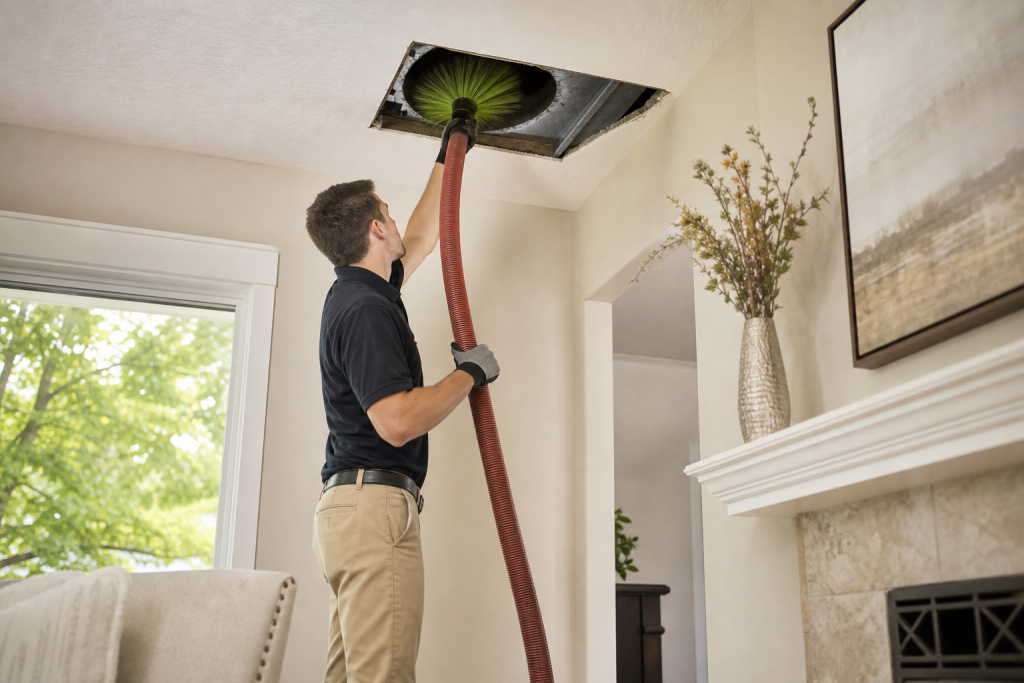
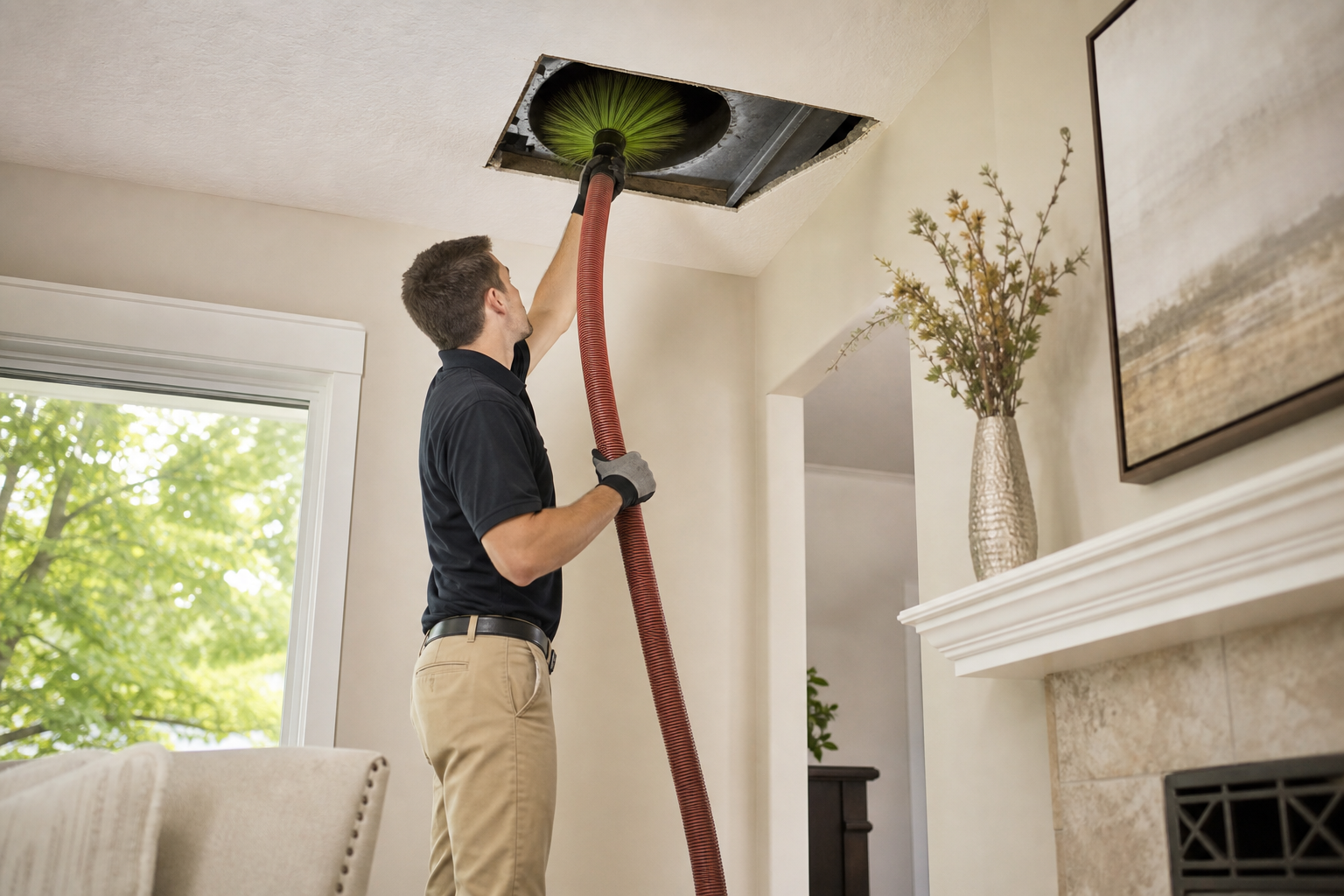
Here’s the mistake we see most often: a homeowner in Dayton hires a “duct cleaning” crew, watches them feed a brush on a cable through the vents, and assumes the job is done. What they didn’t see—because the equipment couldn’t do it—was negative pressure containment, sealed HEPA exhaust, or any way to verify what actually left the system. We’ve been called in after those jobs to finish what a Rotobrush and portable vacuum couldn’t touch.
What Abatement Technologies Equipment Actually Does
Abatement Technologies builds negative air machines for environments where airborne contamination carries legal and health consequences—asbestos abatement, mold remediation, healthcare renovation. Their HEPA-AIRE series doesn’t just suck air through a filter; it creates contained negative pressure zones, measures airflow in cubic feet per minute (CFM), and exhausts through certified HEPA filtration that traps 99.97% of particles at 0.3 microns.
Standard portable duct vacuums—often just shop vacs with longer hoses—move 100–200 CFM with basic bag filters. A professional Abatement Technologies negative air unit pulls 1,000–2,000 CFM through true HEPA, maintaining containment pressure so dislodged debris doesn’t escape into your living space during cleaning. In Dayton’s older housing stock—think Kettering ranches, Oakwood colonials, or the tight ductwork in Belmont’s post-war bungalows—that pressure differential matters. Without it, you’re just stirring up dust and hoping your HVAC filter catches it.
We run Nikro and Rotobrush equipment for standard residential maintenance, but when we’re dealing with chronic allergy complaints, post-renovation contamination, or properties with documented air quality concerns, we bring the Abatement Technologies setup. The difference isn’t marketing—it’s measurable airflow, verifiable filtration, and a containment protocol that residential-grade equipment simply can’t replicate.
Why HEPA-Filtered Exhaust Matters in Dayton Homes
Dayton sits in a valley where humidity swings and seasonal allergens get trapped in tightly sealed modern homes and drafty older ones alike. The Miami Valley’s ragweed counts and mold spore seasons are well-documented, and for residents with asthma or allergy sensitivities, standard duct cleaning can actually make symptoms worse if the equipment exhausts fine particles back into the home.
Here’s what happens with consumer-grade or rental equipment: the vacuum captures visible debris but exhausts smaller particles through the motor or around filter seals. A true HEPA-negative air machine like Abatement Technologies’ HEPA-AIRE PAS2400 or PAS6000 series seals the filtration path and tests filter integrity before each job. The exhaust air is cleaner than what you’re breathing.
We’ve worked with families in Beavercreek and Centerville where a child’s asthma management plan specifically required documented HEPA containment for any HVAC disturbance. Their allergist didn’t ask for “a good cleaning”—they asked for equipment that met abatement standards. That’s the gap Abatement Technologies bridges: bringing commercial containment protocols into residential settings where health outcomes actually matter.
What Professional Equipment Lets Us Document and Verify
When we clean with Abatement Technologies equipment, we’re not just running a brush and hoping. The negative air machines have built-in manometers that display static pressure and CFM in real time. We can show you—before, during, and after—whether the system is maintaining proper containment. That data matters if you’re:
- Documenting air quality for a medical or legal reason
- Preparing a home sale where disclosure matters
- Managing a rental property and need tenant-facing verification
- Addressing a recurring mold or moisture issue with your insurance carrier
Last month we cleaned a system in a Washington Township home where the owners had fought a persistent musty smell for two years. Previous cleaners had run brushes and deodorizers. We set up negative pressure, pulled 1,400 CFM through the main trunk, and found saturated fiberglass liner in a return plenum that had been missed because no one had ever pressurized the system to trace airflow. The documentation from that job went straight to their HVAC contractor for repair coordination.
Portable vacuums don’t generate that kind of actionable intelligence. They’re built to clean what’s reachable. Abatement Technologies equipment is built to diagnose and document the full air pathway.
Owning vs. Renting: Why the Equipment Source Matters
You can rent a negative air machine. Several Dayton-area equipment suppliers will deliver a HEPA unit for a weekend project. What you can’t rent is the calibration discipline, the filter inventory, and the job-specific protocol knowledge that comes from running this equipment daily.
Abatement Technologies machines require pre-job filter integrity testing, post-job decontamination, and regular airflow verification. The HEPA filters alone run $200–$400 per changeout, and a busy crew might cycle through several in a month. A rental unit with an overdue filter is worse than useless—it’s a false sense of security exhausting contaminated air through a compromised barrier.
We’ve invested in this equipment because air duct cleaning in Dayton isn’t a side business for us. Thomas Hernandez has been the hands-on technician on every job for two decades. When we bring the Abatement Technologies setup, it’s maintained to manufacturer spec, filter logs are current, and we know from experience whether your system’s static pressure can handle the CFM without damaging flex runs or older ductboard.
A rental customer guesses. We measure, adjust, and verify.
Questions to Ask Any Contractor About Their Equipment
If you’re interviewing duct cleaning companies in Dayton, don’t settle for “we use professional equipment.” Ask specifics. The answers separate actual technicians from dispatchers reading from a script:
- “What CFM does your negative air machine pull, and do you monitor it during the job?” — Look for a specific number and real-time measurement, not “powerful suction.”
- “Is your HEPA filtration certified to 99.97% at 0.3 microns, and when was it last tested?” — True HEPA requires documented integrity; “HEPA-type” or “HEPA-like” are meaningless.
- “Do you create negative pressure containment, or just vacuum at the vent?” — Containment means sealing registers and pulling from the main trunk, not brushing individual runs without isolation.
- “What equipment brands do you own and maintain?” — Rotobrush, Nikro, and Abatement Technologies are names that signal investment. “Commercial-grade” without specifics is a red flag.
- “Can you show me pre- and post-cleaning airflow or pressure readings?” — Documentation capability is the hallmark of professional-grade work.
We’ve had homeowners in Riverside and Huber Heights tell us they asked these questions of three companies before calling us. Two couldn’t answer. One referenced “industrial-strength shop vacs.” There’s no such thing.
When to Call a Pro in Dayton
Call when you’ve had a cleaning that didn’t solve the problem, when someone in your household has documented respiratory sensitivity, or when you’re dealing with post-construction dust that keeps recirculating. Call when you want to verify what happened, not just hope it helped.
We also handle dryer vent cleaning in Dayton and HVAC cleaning in Dayton as part of our complete air pathway service—because isolated duct cleaning without addressing the full system is like washing your car and ignoring the engine.
The Bottom Line
Abatement Technologies equipment represents a different standard: containment protocols, verifiable HEPA filtration, and documented airflow that residential vacuums can’t approach. In Dayton’s mix of historic homes, new construction, and medically sensitive households, that standard isn’t overkill—it’s the difference between moving dust and removing it.
Key takeaways:
- True negative air machines pull 1,000+ CFM through certified HEPA filtration, not “HEPA-type” bags
- Containment pressure prevents dislodged debris from re-entering your living space during cleaning
- Documentation capability separates professional equipment from rental-grade tools
- Equipment ownership and maintenance discipline matter as much as the brand name
- Dayton’s humidity, allergens, and older housing stock amplify the need for verified containment
If you’re in Dayton and want to know what your ducts actually contain—and whether your last cleaning actually removed it—Titan Air Duct Cleaning Greater Dayton offers free estimates. Thomas Hernandez personally evaluates every system, and we’ll show you exactly what equipment we recommend for your specific situation. Call (866) 834-6947.
Frequently Asked Questions
Abatement Technologies negative air machines create contained negative pressure zones with verified HEPA filtration and real-time CFM monitoring—equipment built for asbestos and mold abatement, not residential vacuum jobs. Standard portable vacuums lack the airflow, filtration integrity, and containment protocols to prevent recontamination during cleaning. If you’re comparing contractors in Dayton, ask for specific CFM ratings and HEPA certification documents. Call (866) 834-6947 and we’ll walk you through what to look for.
Professional air duct cleaning in Dayton typically ranges from $400 to $900 for a standard residential system, with Abatement Technologies-level containment and HEPA filtration falling in the upper portion of that range due to equipment and filter costs. Factors include system size, accessibility, contamination level, and whether duct repair or sealing is needed. We provide upfront pricing after inspection—never phone quotes without seeing your layout. Call (866) 834-6947 for a free estimate.
Yes, if someone in your Dayton household has asthma, allergies, or immune sensitivity, HEPA-filtered negative air cleaning is worth the additional cost because standard equipment can redistribute fine particles that trigger symptoms. The 0.3-micron filtration standard captures pollen, mold spores, and dust mite debris that cheaper filters miss. We’ve worked with allergist referrals throughout the Miami Valley who specifically require documented HEPA containment. Call (866) 834-6947 to discuss your household’s specific needs.
You can rent negative air machines, but without training in containment setup, CFM balancing, and filter integrity testing, you’re likely to damage ductwork or create a false sense of cleanliness. Dayton’s older homes often have fragile flex duct or asbestos-containing duct tape that requires professional assessment. We don’t recommend DIY for systems with suspected mold, vermiculite insulation, or post-1980s ductboard with fiberglass degradation. For a professional evaluation with no obligation, call (866) 834-6947.
Written by Thomas Hernandez, Owner & Lead Technician at Titan Air Duct Cleaning Greater Dayton, serving Dayton since 2006.
Need Air Duct Cleaning Help?
Call Titan Air Duct Cleaning Greater Dayton — licensed & insured, here with fast after-hours help in Dayton.
(866) 834-6947